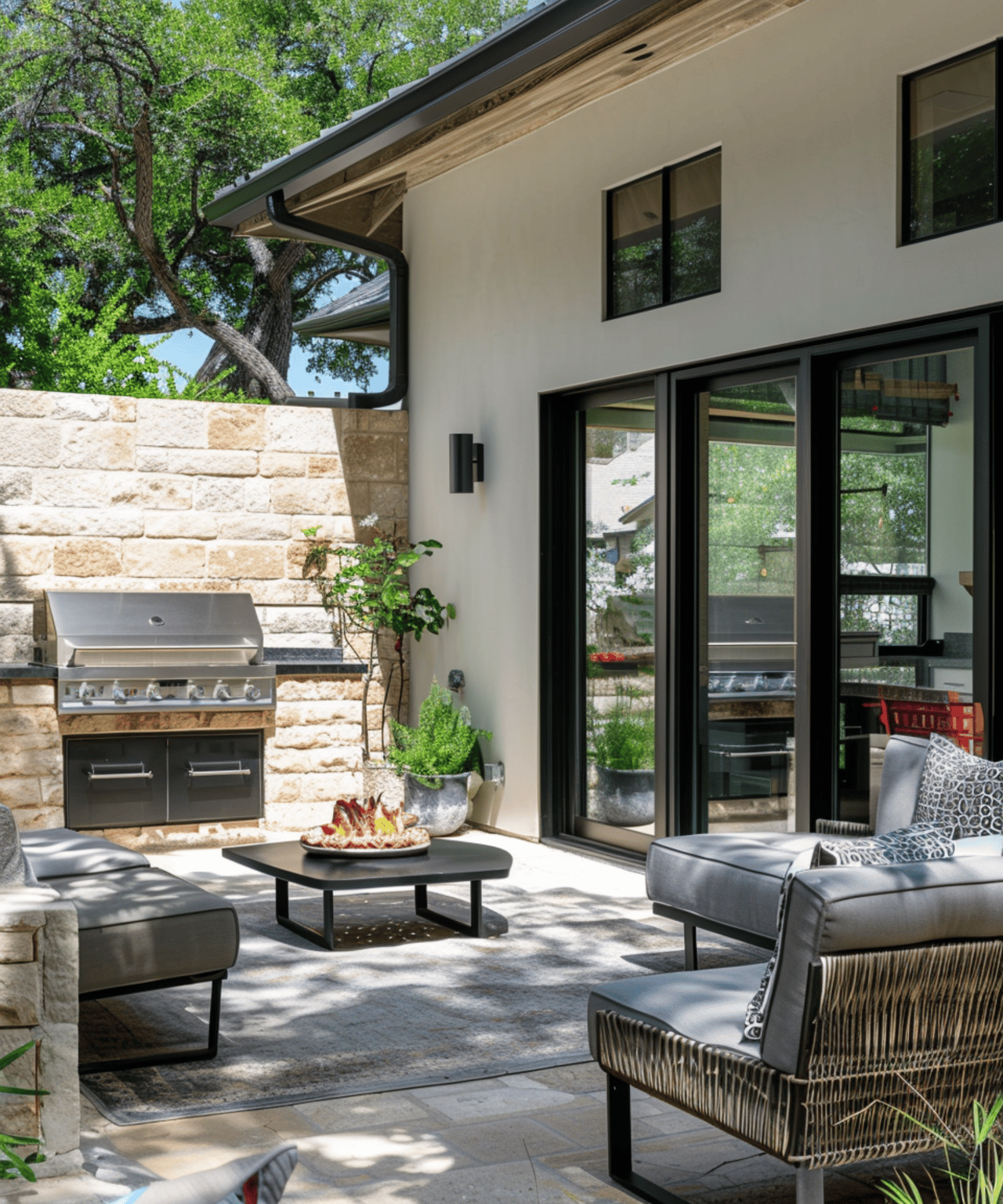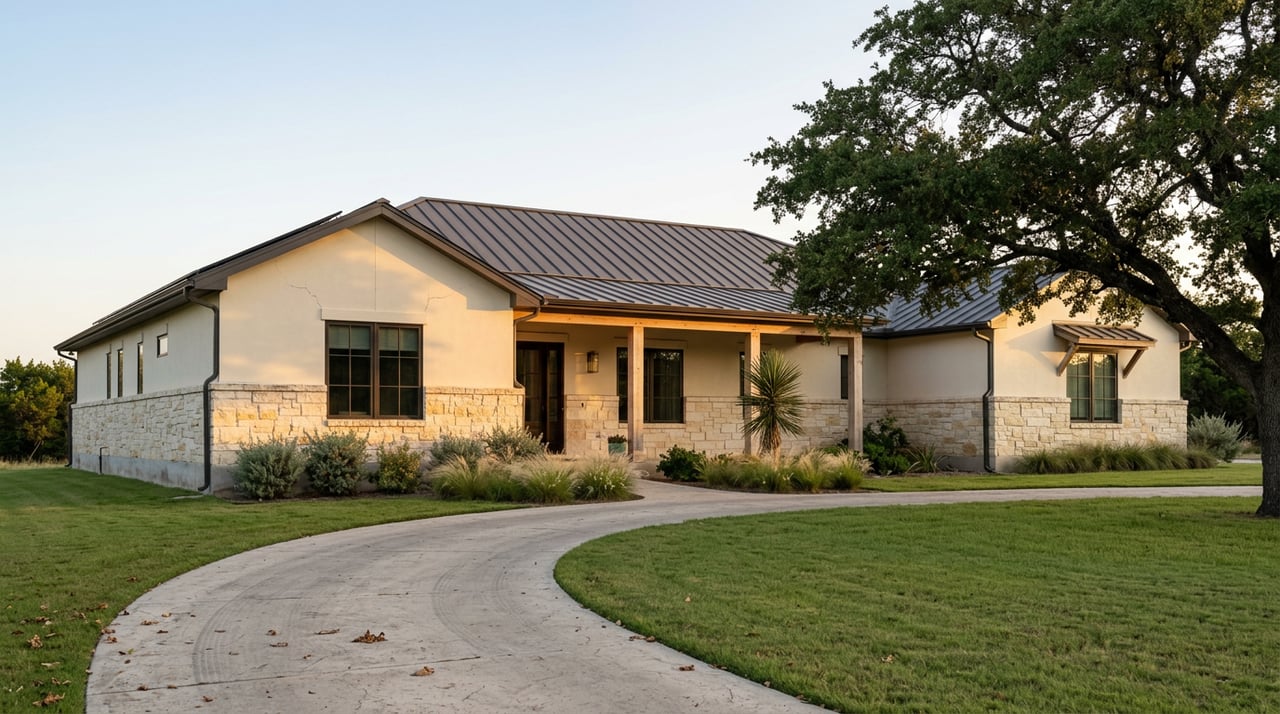
Picture two listings, both in Leander, both priced at $450,000, both roughly the same square footage. One sits in Bryson. The other sits in Block House Creek. Same lender, same rate, same down payment. The monthly payment on one of these homes will be noticeably higher than the other, and the difference has nothing to do with the house itself.
It comes down to a line on the closing disclosure that most buyers do not think to ask about until they are already under contract: the tax rate attached to the ground the house sits on, not the house.
The median price is not the number to argue about
Leander's home prices get reported differently depending on who is doing the reporting, and the gap is wide enough to matter. Over the three months ending July 2026, the trailing median sale price for Leander sat at $421,000, essentially flat compared to the same period the year before. As of September 2026, a separate market snapshot put the average home price in Leander at $640,859.
That is not a typo and it is not two competing sources disagreeing about the same thing. A median and an average answer different questions, and in a city where the housing stock ranges from entry-level resale in Summerlyn to seven-figure custom builds on Hill Country lots in Travisso, that spread between median and average is doing real work. The average gets pulled upward by a relatively small number of high-end new construction sales. The median tells you what a typical transaction looks like. Neither number tells you what your specific address will cost to hold once you own it.
That is the part worth sitting with before you get attached to a listing photo.
The variable that actually decides your payment
Most of Leander sits in Williamson County, where the baseline combined property tax rate, county plus city plus school district, runs somewhere in the neighborhood of 2.1 to 2.3 percent of appraised value. Homes built inside a Municipal Utility District, commonly shortened to MUD, carry an additional charge on top of that baseline, typically adding another 0.3 to 0.7 percentage points. In practice that pushes several of Leander's newer master-planned communities into an effective tax range of roughly 2.5 to 2.8 percent, while established, MUD-free pockets of the city stay closer to the 2.2 to 2.5 percent range.
A MUD is a taxing entity created to fund the roads, water lines, and drainage that a new development needs before a city is ready to annex it and take that infrastructure over. It is governed by a board, and it can issue bonds. Homeowners pay down those bonds through their tax bill until the debt is retired.
Williamson County's tax assessor-collector put it plainly in a 2019 interview with Community Impact, describing what buyers in the area's MUDs were often paying: "If you're living in a [MUD], you are probably paying one of the highest taxes in the county, depending on which MUD you live in." That description was about the Cedar Park and Leander area specifically, and it still describes the mechanism accurately today, even though the dollar figures from that year are long out of date.
Here is the part that changes the calculation rather than just complicating it: MUD rates are not fixed. As the bonds get paid down, the rate drops. A district created in the late 2010s with a rate near 0.55 percent can be meaningfully lower by 2026, and continue falling toward the 0.20 percent range as it approaches full payoff, at which point some districts dissolve into the city's regular utility system entirely. The tax gap between a brand-new community and an established one is not a permanent feature of the new community. It is a temporary cost that shrinks every year the bonds get serviced.
What that looks like community by community
| Community | MUD status | Typical 2026 price range | Effective tax rate* | What you're actually paying for |
|---|---|---|---|---|
| Block House Creek | No MUD | Mid-$300s and up, established resale | Roughly 2.1%-2.3% | Mature landscaping and Leander ISD zoning without a utility district add-on |
| Crystal Falls | Varies by section | Sub-$500K resale to seven figures | Roughly 2.2%-2.5% | Twenty-plus years of paid-down infrastructure and a golf course, but the rate depends on which of its sections you buy into |
| Summerlyn / Larkspur | MUD included | $400K-$450K | Falls within the 2.5%-2.8% bracket | Entry price band with the tax load built into the sticker price |
| Bryson | MUD, newer infrastructure | High-$300s to low-$700s | Roughly 2.5%-2.8% | The newest amenity package in the city, plus a bond schedule still being paid down |
| Deerbrooke | MUD near its peak | Mid-$400s and up | Near the top of the 2.5%-2.8% bracket | A rate that has nowhere to go but down as the community finishes building out |
| Travisso | MUD | $600s to $2M+ | Roughly 2.5%-2.8% | Hill Country views and resort-style amenities carrying the same MUD math as Bryson |
*Ranges reflect what multiple local sources reported across 2026. Rates vary by exact address and should always be confirmed directly.
Crystal Falls is a useful case study in why "the community" is not always specific enough. It opened in the early 2000s and has grown into roughly 3,000 acres and more than 3,600 homes split across four distinct sections, the original neighborhood, The Fairways, The Highlands, and Crystal Falls Mesa. Different sections fall under different taxing arrangements, which means two homes listed at the same $500,000 price point, in the same community, can carry annual tax bills that differ depending on which section they sit in.
How financing incentives affect total cost
New construction communities lean hard on incentives to move inventory, and those incentives deserve a closer look. Builders active in Bryson, Travisso, and Crystal Falls commonly offer $10,000 to $15,000 in closing cost credits, but only if the buyer finances through the builder's preferred lender. Compare that lender's rate and fees with what an independent lender would offer. A credit that looks like free money at the closing table can end up costing more than it saves if a higher rate compounds over years of payments.
None of this makes new construction a bad choice. Builder rate buydowns can genuinely lower an effective interest rate, and a newer floor plan with modern systems has real value. It just means the number on the sales office flyer and the number on your actual monthly statement are two different conversations, so compare the full costs and financing terms before signing.
What to ask before you tour a sales office
- Pull the exact address on the Williamson County Appraisal District site at wcad.org and look for a line item labeled MUD, PID, or Utility District. If it's there, ask how many years remain on the bond schedule.
- Ask for a full year-one tax estimate covering every taxing entity, not just city, county, and school district combined.
- If a builder offers a closing credit tied to their preferred lender, get an independent quote for the same loan terms before deciding whether the credit is actually a discount.
- If you're comparing two homes in the same master-planned community, confirm they're in the same section. A shared community name doesn't guarantee a shared tax rate.
FAQ
How do I check whether a specific Leander address is in a MUD? Search the address directly on the Williamson County Appraisal District site at wcad.org and review the tax rate breakdown by jurisdiction. Any line labeled MUD or Utility District confirms it, and the office can also answer questions by phone.
Does a MUD tax rate ever go away? It declines as the district pays down its bonds, and in some cases dissolves into the city's regular utility system once the debt is retired. The timeline runs years, not months, so it is a long-term factor rather than something that resolves before your next tax bill.
Is a lower price in a MUD community actually a worse deal? Not automatically. Builders in MUD-heavy communities often price homes to offset the added tax load, and the incentive packages can be real value if you shop the financing independently. The only way to know is to model the full monthly cost, principal, interest, tax, insurance, and any HOA dues, side by side rather than comparing list prices alone.
Running that full comparison is exactly the kind of math worth doing before you fall for a floor plan. If you're weighing a resale in Crystal Falls against new construction in Bryson or Travisso, or trying to figure out what a specific address will actually cost to carry, Victor Barrios can walk through the numbers with you, section by section, tax line by tax line. También podemos hacerlo en español si lo prefieres. Let's Connect.
This article is general information, not legal, tax or financial advice. Consult a qualified professional about your situation.